Conceptual Bridges Archive
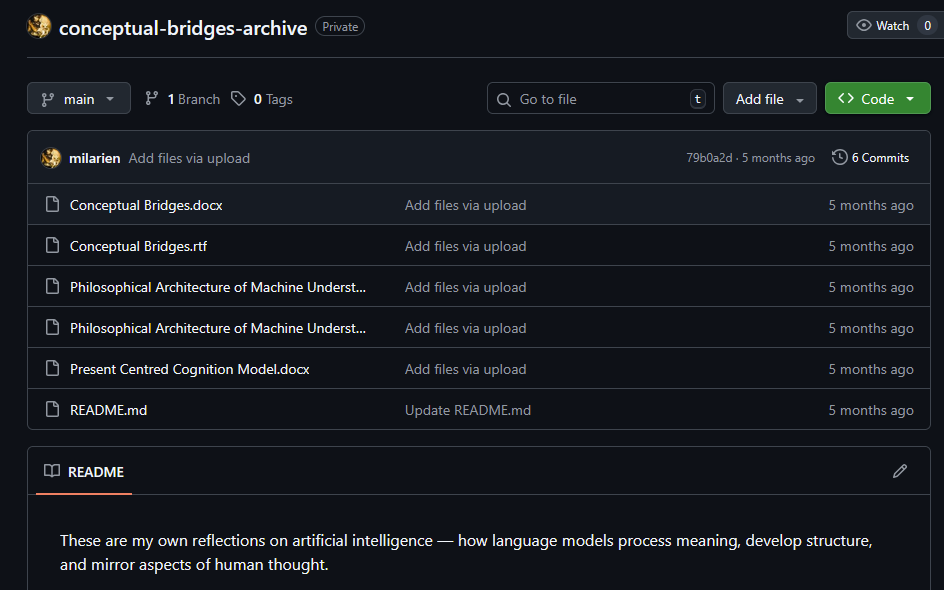
Archive repository containing early materials on machine understanding, conceptual bridges, and present-centred cognition. Repository state recorded 20 Nov 2025.
Establishes prior conceptual development.
A restrained public chronology and evidence surface for Aurora-Lens, focused on what can be dated, checked, and separated from broader Milamba archive material.
This page is the restrained Aurora-Lens proof and precedence page. It preserves the public record without importing the whole Milamba archive into the product site.
Aurora-Lens is grounded in a PEF-based admissibility architecture authored by Margaret Stokes and made externally legible through late-2025 filings, public demonstrations, research records, package releases, and live deployment.
The purpose here is narrow: establish chronology, authorship, and public traceability. Commercial uptake, institutional approval, and market visibility are separate questions. They are not the measure of conceptual origin.
Externally anchorable milestones only. The deeper intellectual development predates this sequence.
Conceptual Bridges Archive public repository.
Provisional patent application 2025905835 filed: AURORA — Autonomous Conceptual Reasoning Architecture.
Provisional patent application 2025905860 filed: PEF Specification.
Provisional patent application 2025905885 filed: Autonomous Compositional Reasoning Architecture Integrated with Persistent Existence Frame.
Empirical demonstration document records comparative ambiguity testing and ties the architecture to the early filed provisional applications.
Provisional patent application 2025906132 filed: explicit compositional reasoning in a continuous-present cognitive architecture.
Provisional patent application 2025906680 filed: admissibility-controlled epistemic governance for machine reasoning.
aurora-lens enters public PyPI release history with version 0.1.1.
aurora-lens version 2.0.0 released publicly on PyPI.
Aurora-Lens live deployment online producing runtime admissibility decisions with forensic audit output.
PCT application PCT/AU2026/050569 filed for Admissibility-Controlled Epistemic Governance for Machine Reasoning Systems.
Six documentary artefacts establish the chronology: foundation, named architecture, implementation, public release, circulation, and measurable exposure. Each screenshot serves a distinct evidentiary role.
Archive repository containing early materials on machine understanding, conceptual bridges, and present-centred cognition. Repository state recorded 20 Nov 2025.
Establishes prior conceptual development.
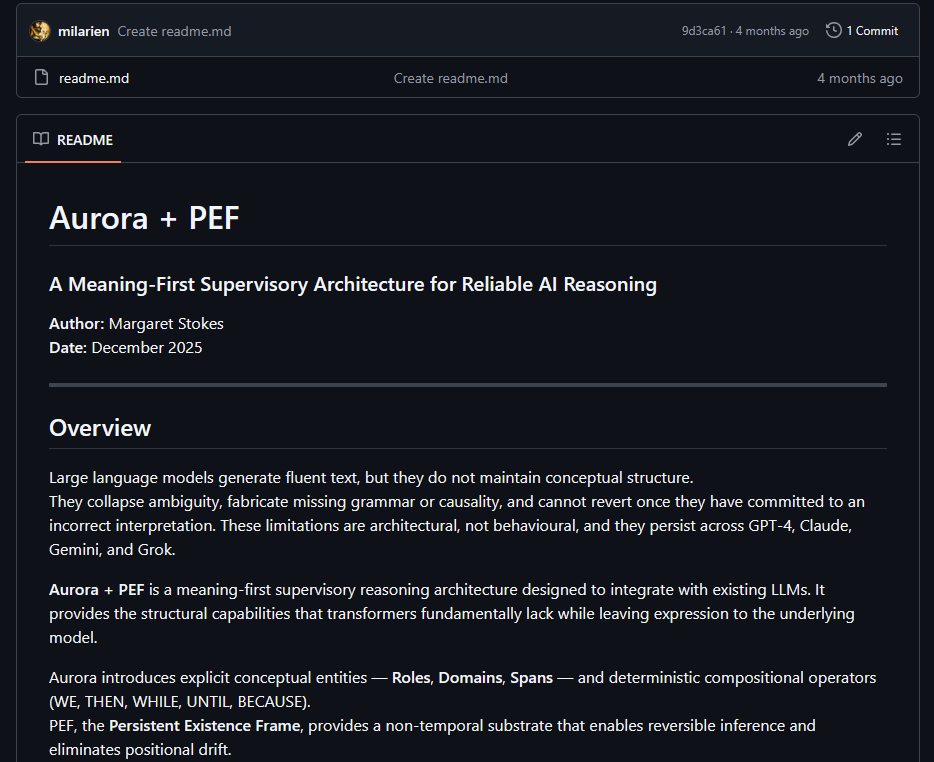
Public repository identifying Aurora + PEF as a meaning-first supervisory architecture and defining the Persistent Existence Frame.
Establishes public naming and architecture identity.
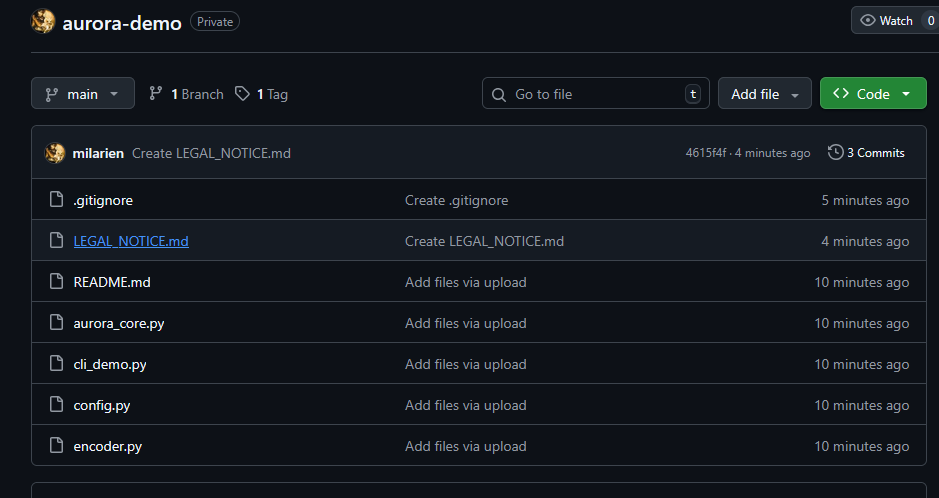
Working source repository showing the demo implementation surface, CLI, configuration, and reasoning components.
Demonstrates implementation rather than concept alone.
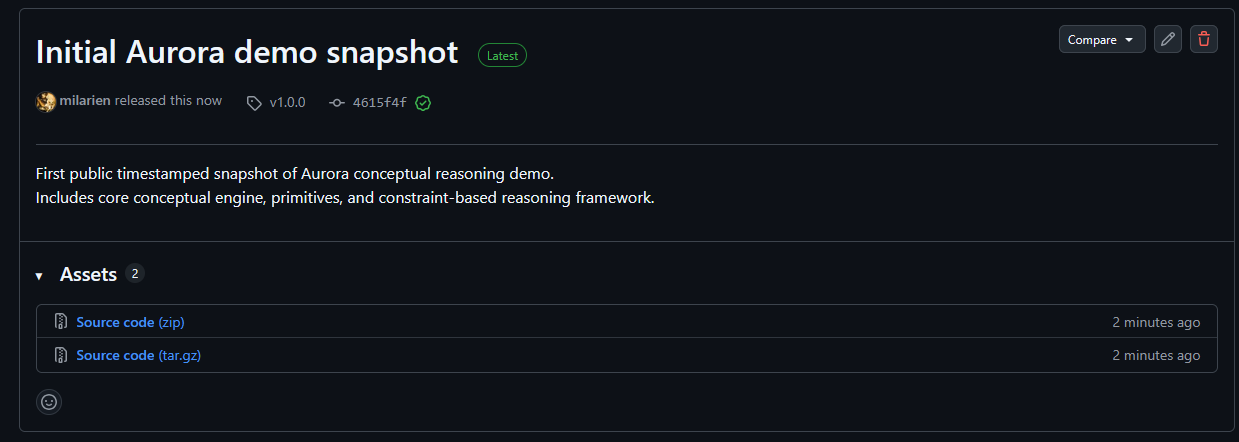
Version 1.0.0 release providing a timestamped public snapshot of the demonstration system.
Anchors the implementation in a dated release record.
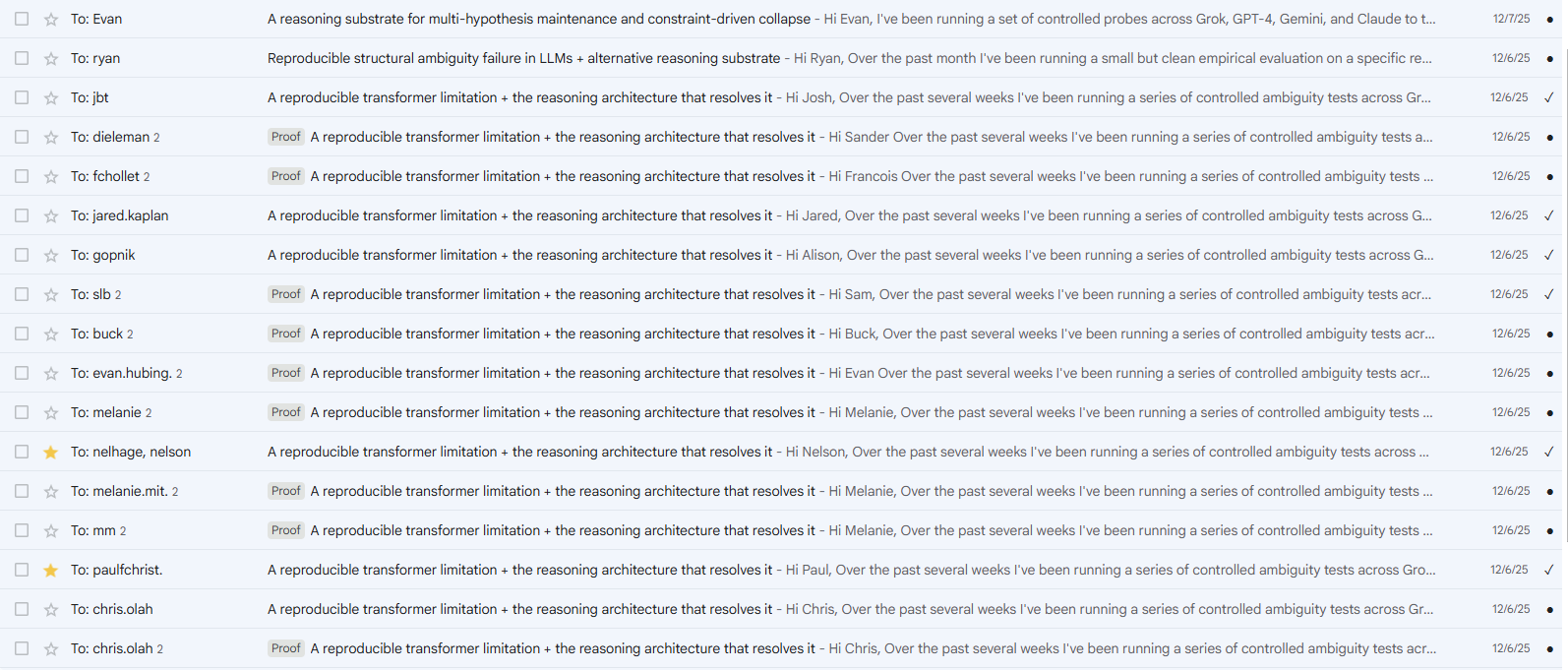
Sent-mail records showing circulation of the work to researchers, founders, engineers, and public intellectuals.
Demonstrates active dissemination rather than private development.
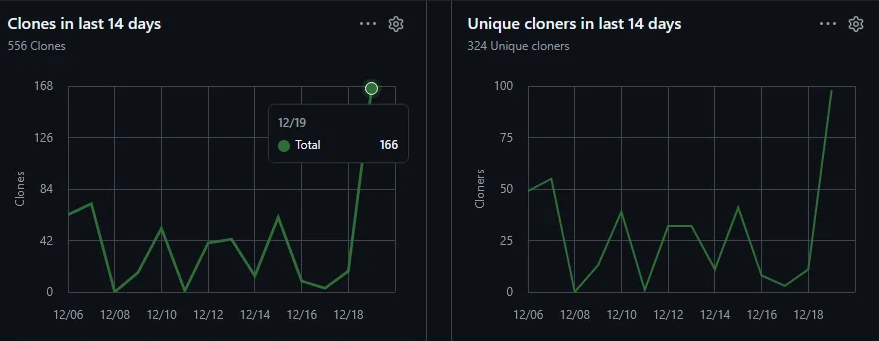
GitHub traffic data showing substantial clone activity during the December 2025 exposure window.
Demonstrates measurable repository exposure.
Precision matters. The proof page should not overclaim.
Public authorship and dated precedence of a specific architecture centred on persistent existence, admissibility before consequence, governed refusal, lawful continuation, and auditability.
This page does not prove direct derivation by every later vendor feature. That would require a denser evidentiary chain.
Adjacent market convergence does not equal architectural equivalence. It also does not erase prior public authorship.